


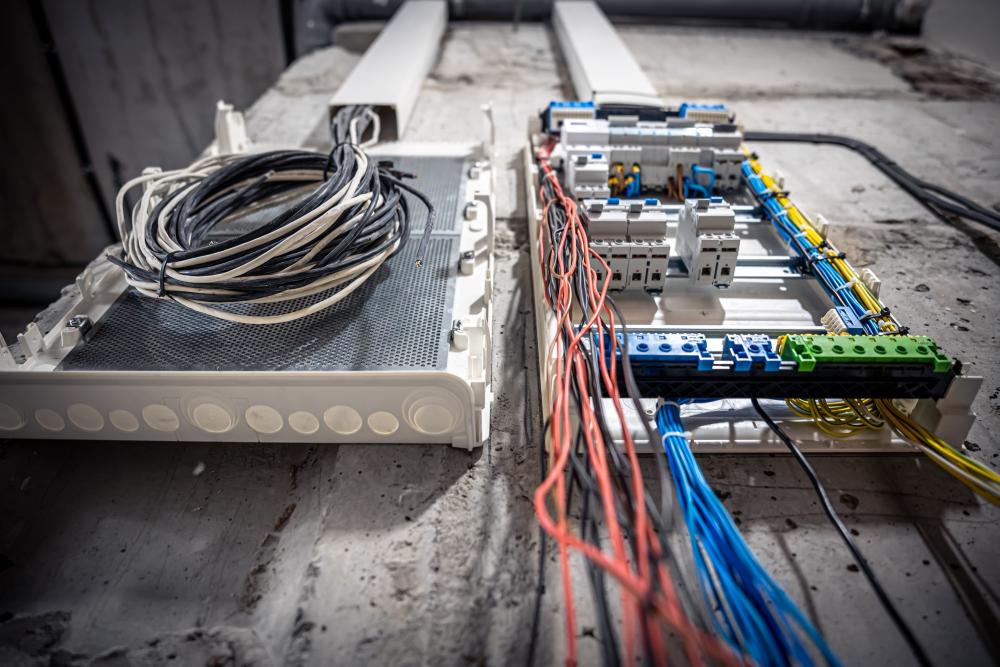
Electrical installation design and execution services
The project for electrical installations is necessary for any new construction, for constructions that are modernized, for constructions that expand, or for changes to electrical installations for functional reasons.
In the design phase, through calculations, the technical-economic criteria for the operation of the electrical installations are established, optimal options for the location of the electrical power supplies are proposed, the location having a determining role in reducing losses during the exploitation period, the possibilities of making the installations more flexible are studied, as then when changes are needed to be made in the shortest time and with minimal investments.
The design department will not only provide you with design and development, but will also completely oversee the entire project. Through qualified and experienced designers, we will check the accuracy and quality of the electrical installation project, we will develop and provide all the necessary documents.
Each electrical installation project being customized, we design together with the beneficiary the best solutions for interior and exterior electrical installations for any building, electrical distribution panels, electrical automation panels.
We analyze the existing project/situation and offer optimal solutions from the point of view of the quality-price ratio, respecting the standards and norms in force;
We make the necessary documentation in order to obtain the authorizations;
The documentation includes:
- Supporting technical report;
- Specifications;
- Calculation summary;
- Determining phases;
- List of equipment;
- Pre-measurements;
- Related plans and schemes in dwg or pdf format and plotted.
- Consulting during the construction period.
The design of systems for detection – fire signaling, fire limitation/extinguishing and hot gas smoke extraction
We are certified by the IGSU for the preparation of ISU (Emergency Inspectorate) authorization projects as well as the design of systems for detection – fire signaling, fire limitation/extinguishing and smoke extraction of hot gases.
The 3 categories of fire installations consist of:
- The fire detection and signaling project involves:
- design phases: DTAC, PT, DDE, SF (depending on the beneficiary’s requirements)
- location of smoke detectors, establishment of fire detection loops, fire detection central, audible commands to equipment (opening access control doors, smoke control, etc.)
- plot details, equipment addresses, material lists, etc. (depending on the design phase)
- The fire containment/extinguishing project involves:
- design phases: DTAC, PT, DDE, SF (depending on the beneficiary’s requirements)
- the placement of internal and external hydrants depending on the size of the space and the number of simultaneous jets
- establishing the internal fire extinguishing solution when necessary (sprinklers, inert gases, aerosols, etc.)
- isometric diagrams, loss calculations, etc. (depending on the design phase)
- The hot gas exhaust project involves:
- design phases: DTAC, PT, DDE, SF (depending on the beneficiary’s requirements)
- establishing the hot gas exhaust solution depending on the building’s architecture (roof hatches, side hatches, shutters, etc.)
- connection details for smoke hatches, shutters, etc. (depending on the design phase)
Installation design of intrusion detection systems, cctv, access control, internet-tv-telephony:
- Burglary detection installation design (PIR sensors, external motion and detection sensors, burglary alarm, dispatching, etc.)
- CCTV video surveillance system design
- Interior exterior access control system design
- Cabling system design, internet, television and telephone structure
The design of low-voltage electrical installations related to buildings, offices or normal buildings involves the following steps:
- the architectural plan of the building in editable format (autocad compatible)
- the list of electrical consumers that will be supplied
- the position of electrical consumers
- requirements of the beneficiary
- establishing the electrical installation design phase (DTAC, PTh or PT+DDE)
- realization of the project of electrical installations
- handing over the project
The design of electrical connections, solution studies or network studies involves the following steps:
- information about the consumer that will be fed
- obtaining topographic plans
- obtaining technical information from the network provider if it does not already exist
- realization of the project of electrical installations, connection or solution study
- approval of the project in the CTE committee of the supplier
- obtaining the Technical Approval for Connection or the CTE Approval